
Headline: Marlton Pike Is Getting Two New Car Washes — and a Longtime Diner May Be Lost to Make Room
Quick take
Permits are in for two new car wash projects along Marlton Pike (Route 70) in Cherry Hill — one of them tied to the removal of the long‑standing Cherry Hill Diner. If approved and built, these projects will change small slices of the Route 70 corridor that drivers use every day as they head to and from I‑295, and they underscore larger development trends along Marlton Pike: more auto‑oriented services, larger footprints, and ongoing pressure on older, independent businesses.
Where this sits on the map
Marlton Pike (Route 70) is Cherry Hill’s main east‑west commercial strip, running right into exits that connect to I‑295 and the New Jersey Turnpike. A quick look on Google Maps shows the corridor is a mix of strip centers, restaurants, service businesses and standalone properties — exactly the kind of real estate that car wash operators target for high visibility and quick in‑and‑out service for commuters and shoppers.
What was filed
Local permit records and site plans filed with Cherry Hill township indicate two car wash proposals have been submitted for properties along Marlton Pike. One filing specifically involves the demolition of the Cherry Hill Diner, a familiar fixture on Route 70 for years, to make way for a modernized tunnel or express car wash operation (the project imagery and branding attached to the permit align with national/regional tunnel‑wash chains). The second permit covers a separate car wash facility further down the corridor.
Who’s behind it — and why it matters
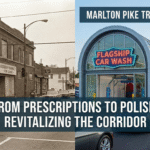
The imagery tied to the larger project looks like branding commonly associated with Tidal Wave Car Wash — a multi‑state chain with a number of New Jersey locations. Tidal Wave and similar operators market fast, automated tunnel washes, membership plans and vacuum bays; they also promote water recycling systems and high throughput as selling points for property owners. On Google Maps and Yelp, Tidal Wave locations often draw reviews praising the speed and quality of the wash, with occasional complaints about price or upsell practices — useful context for what local residents can expect.
Why the diner’s demolition is a community story
This isn’t just another subdivision permit. Diners are part of South Jersey’s cultural fabric; the Cherry Hill Diner has long been a recognizable stop for residents and travelers along Route 70. Yelp and other local review pages for that diner show the kind of neighborhood attachment that often follows these small businesses: regulars, memories tied to weekend breakfasts, and an identity that new development doesn’t always replace.
Replacing a diner with a car wash is emblematic of larger shifts:
– Land use: Marlton Pike has limited parcels left for redevelopment; commercial owners often get more steady revenue from national chains or high‑throughput services (like car washes) than from small, independent restaurants.
– Traffic and infrastructure: Car washes can increase turning movements, queuing on Route 70, and local water/sewer demand. These impacts will have to be evaluated in Cherry Hill’s permitting process.
– Economic churn: Longtime small businesses can be priced out as property values and expectations for site improvements rise.
Typical concerns and planning questions
When projects like these come before township planning boards, residents and planners typically ask about:
– Stormwater runoff and on‑site water recycling (important for car wash operations)
– Traffic flow, queuing, and safety at driveways on a busy Route 70 corridor
– Noise, lighting, and hours of operation
– Any mitigation or community benefits the developer will offer
NJ.com and Patch have covered similar debates in South Jersey towns: developers tout jobs, investment, and modern amenities, while neighbors often ask for tighter controls on traffic and environmental protections. Expect Cherry Hill’s process to mirror those conversations.
What this means for drivers on I‑295 and locals
For commuters who use I‑295 and exit onto Route 70 or nearby interchanges, the changes will be tangible:
– More convenient car wash options (and possibly membership deals tied to commuter patterns)
– Potential short‑term construction impacts near an I‑295/Route 70 interchange
– Longer‑term shifts in the corridor’s character — a move toward more chain and service‑oriented uses
Next steps and how to stay involved
Permits are filed, but construction requires approvals — site plan reviews, possible planning board hearings, and permits from township departments. Cherry Hill residents who want to follow or weigh in should:
– Watch Cherry Hill Township planning board agendas and notices
– Check local coverage on NJ.com and Patch for reporting and meeting summaries
– Leave thoughts on community platforms such as Patch or directly at township hearings
We’ll keep tracking this: as the permits move through review, 295Times will monitor hearing dates, developer presentations, and community responses — and we’ll map how each change along Marlton Pike affects the everyday commute for people using I‑295 and the businesses that line the exit.
If you have a memory of the Cherry Hill Diner or a thought on car washes replacing diners along Route 70, send a note — your perspective helps the community conversation.