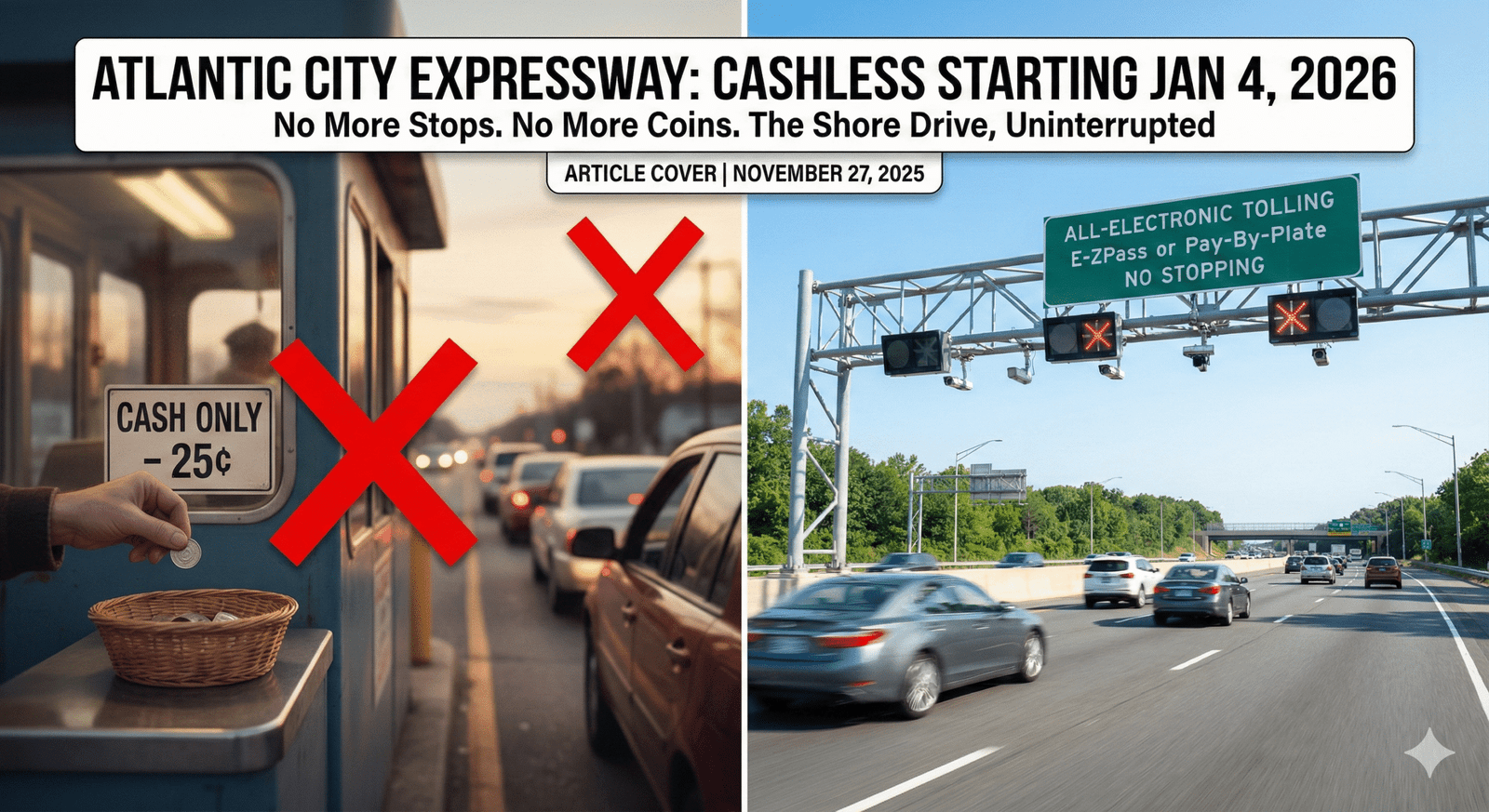

For generations of South Jersey drivers, the sound of the shore trip was specific: the hum of tires on asphalt, the sea breeze, and the metallic clink of quarters hitting the basket at the toll plaza. It was a ritual that signaled you were almost there. But as of January 4, 2026, that sound is officially history. The South Jersey Transportation Authority (SJTA) is converting the entire 44-mile Atlantic City Expressway to a fully cashless system, effectively removing the barriers between the Delaware River and the Boardwalk.
Origin Story: A Highway Built for Speed, Finally Unlocked
The Atlantic City Expressway was originally conceived in the 1960s to whisk tourists from Philadelphia to the shore in record time. But for decades, that promise of speed was interrupted by the reality of the toll booth bottleneck.
Stephen F. Dougherty, the Executive Director of the SJTA, has long championed a vision where infrastructure catches up to technology. The decision to go cashless wasn’t just about following a trend; it was about fulfilling the highway’s original purpose.
“We are continuously focused on movement,” the leadership team has emphasized throughout the planning phases. The Pleasantville and Egg Harbor toll plazas, once massive concrete gatekeepers, had become relics that slowed down the very progress they were meant to fund. The origin of this project lies in a simple question: Why make people stop when the technology exists to let them keep going?
Work Ethic: The Invisible Infrastructure
While commuters have been driving below, crews have been executing a massive technical overhaul above. The transition to All-Electronic Toll Collection (AETC) required the installation of high-speed gantries—steel arches packed with cameras and sensors capable of capturing license plates at 65+ mph.
This is the “hustle” of modern infrastructure. It requires a precise coordination of engineering and software to ensure that when a car passes Exit 17 at highway speed, the transaction is instant and accurate.
“It took lots of hard work and commitment,” officials noted regarding the transition. The work ethic here isn’t about physical toll collectors anymore; it’s about the silent, 24/7 reliability of a digital network that never sleeps and never causes a traffic jam.
Personal Connection: The “Shore Drive” Ritual Changes
We all have a personal connection to this road. For the daily commuter in Washington Township or the summer shoobie, the toll plaza was a landmark. It was where you fumbled for change, where you checked your watch, where you felt the first sense of “arrival.”
Removing the booths changes the psychology of the drive. It removes the friction, but it also removes the physical transaction. For many residents, especially older drivers or those who don’t use credit cards, the “cash lane” was a safety net.
This transition acknowledges that the modern driver values time above all else. The connection the SJTA is trying to foster now is one of ease—giving you back the 15 minutes you used to spend idling in line on a Sunday afternoon.
The Product: E-ZPass is the New Currency
The product is no longer just a paved road; it is a service model. And like any service, there is a right way and a “premium” way to pay for it.
The Gold Standard (E-ZPass): This is how the system is designed to work. Your tag is read, the standard toll is deducted, and you never think about it again.
The Penalty (Toll-By-Plate): If you don’t have a transponder, the system still works, but the “product” becomes more expensive. Cameras photograph your plate, and a bill is mailed to the registered owner.
The catch? The rates for Toll-By-Plate are significantly higher—often double the E-ZPass rate—to cover the administrative cost of processing and postage. The “product” for non-E-ZPass holders is now a convenience fee wrapped in an envelope.
Passion and Drive: A Cleaner, Faster Corridor
The drive behind this massive shift goes beyond convenience. It is about environmental impact and safety.
Eliminating toll plazas means eliminating the “stop-and-go” waves that cause thousands of gallons of wasted fuel and countless rear-end collisions every year. The passion of the SJTA engineering team is to create a “green” corridor where vehicles maintain a steady, efficient speed from Turnersville to the tunnel.
As the barriers come down, the Atlantic City Expressway becomes what it was always meant to be: a true expressway.
What You Can Do Next
Avoid the “Toll-By-Plate” Price Hike.
Get Tagged: If you still rely on cash, today is the day to switch. Visit EZPassNJ.com to order a transponder.
Check Your Balance: If you already have E-ZPass, log in and ensure your credit card on file is not expired.
Watch the Mail: If you drive the Expressway after Jan 4th without a tag, look for the bill. It will look like junk mail, but ignoring it will lead to expensive