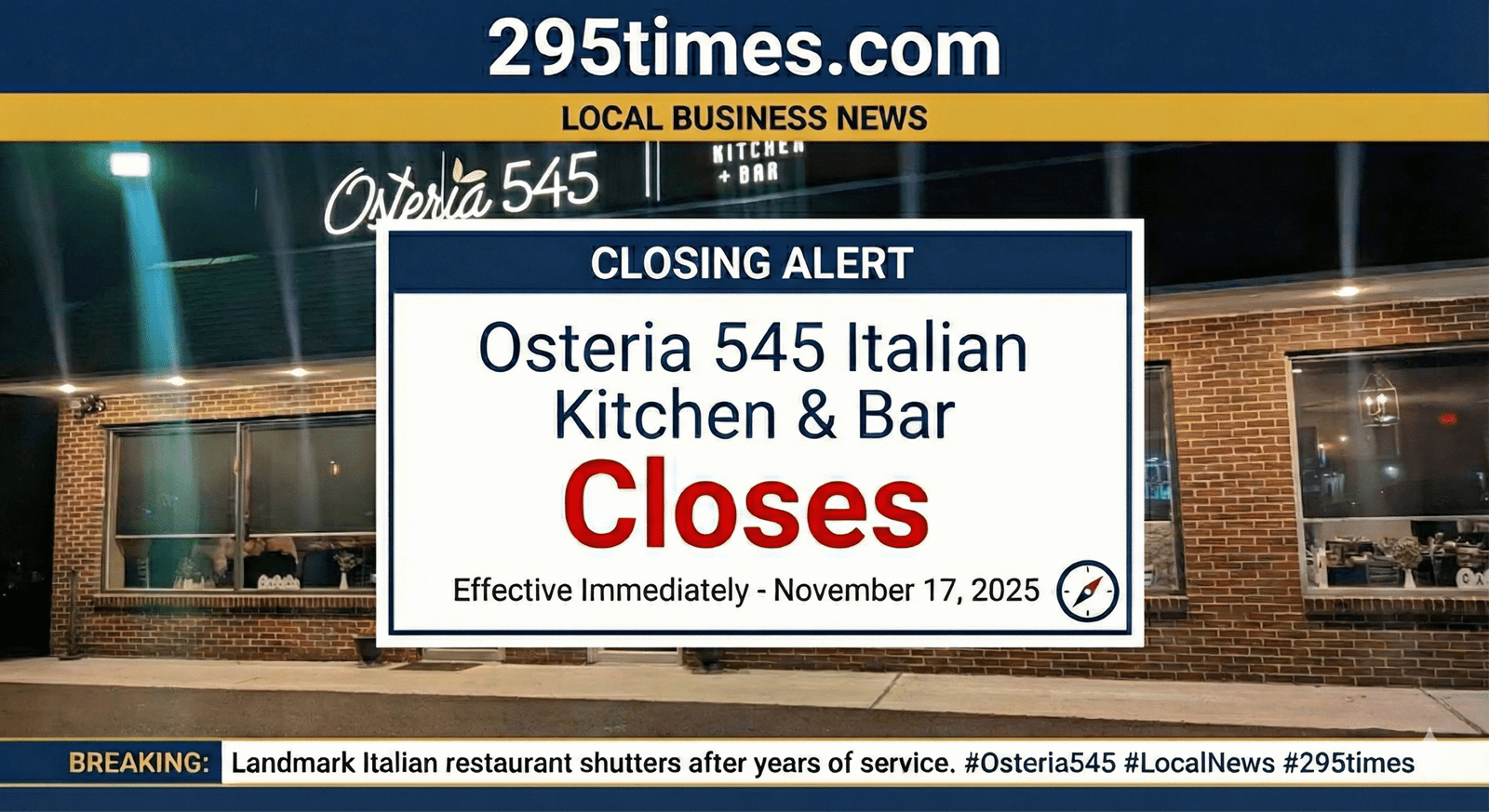

For commuters taking the Paulsboro exit off I-295, the small, inviting glow of Osteria 545 on West Broad Street was a familiar landmark. It was the kind of place that anchored a neighborhood—a reliable spot for a traditional Italian dinner after a long shift or a weekend family meal.
Now, the doors are locked, and Paulsboro has joined the growing list of towns along the corridor to lose a beloved local eatery to an unforgiving economic climate.
The Story Behind the Closure
The decision to close wasn’t due to a lack of community love. Online reviews consistently praised the restaurant’s friendly service and comforting dishes. Instead, the owners pointed to a familiar and frustrating reality for small business owners across New Jersey: the relentless rise in operating costs.
From the price of ingredients and labor to soaring utility bills and insurance premiums, the math for independent restaurants has become increasingly difficult since the pandemic. Osteria 545’s closure is a localized example of a statewide trend, where even well-liked establishments are finding it impossible to keep their margins in the black.
Why This Matters to Paulsboro & the 295 Corridor
The loss of a Main Street restaurant is never just about one business. It creates a ripple effect felt throughout the immediate community and by those who travel the corridor:
The Downtown Anchor: A dinner-service restaurant generates evening foot traffic that benefits neighboring businesses, from barber shops to convenience stores. When the lights go out at a place like Osteria 545, the entire block feels a little quieter and less vibrant.
Options for Workers: Paulsboro sits near major industrial sites and logistics hubs. Local eateries provide essential meal options for shift workers. A closure means one less choice for those looking for a quality meal near their workplace.
The Development Gap: This closure highlights a tension we see along the entire I-295 corridor. While large-scale industrial and logistical investments are booming near the highway, small-scale, independent businesses on Main Streets are facing an affordability crisis. This mismatch is a critical challenge for the future of towns that sit at the intersection of big infrastructure and residential neighborhoods.
What’s Next for West Broad Street?
A vacant storefront is both a loss and an opportunity. The challenge for property owners and local leaders is to find a new concept that can thrive in today’s market—perhaps a takeout-forward model or a quick-service kitchen that can handle lower margins.
For residents and commuters, it means one less local dining option and another reason to drive to a neighboring town. For municipal officials, it’s a stark reminder of the urgent need to support small business sustainability.
The goodwill Osteria 545 built over the years is a testament to its place in the community. If you have thoughts on what you’d like to see fill this space, or ideas on how to support local businesses in Paulsboro, reach out to your municipal leaders or share your tips with us.
— Ari Williams, 295Times.com