
Headline: Five‑Points Exxon Comes Down — What That Empty Lot Could Mean for Washington Twp. and I‑295 Travelers
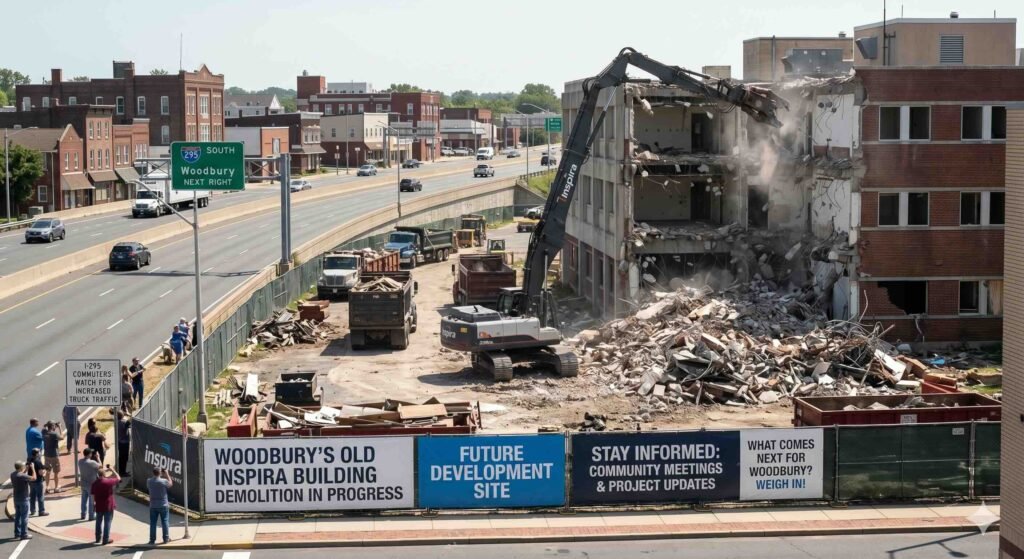
If you’ve been driving around Five‑Points in Washington Township lately you might have noticed a familiar little sign of change: the former Exxon station at the intersection is being demolished. Crews have started taking down the building and forecourt — a move the property’s sellers say is intended to make the 1–acre (ish) site more attractive to potential buyers. For people who live, work, or drive through this stretch of South Jersey, that small demolition is worth paying attention to.
Why this matters to Washington Township and I‑295 travelers
– Visibility for drivers: Five‑Points is a crossroads for local traffic and people using the broader I‑295 corridor. Whatever ends up on that lot will be seen by thousands of cars every week, so the site’s next use will influence the character and commercial mix drivers encounter when they exit the interstate here.
– Neighborhood livability: The parcel sits close to homes and everyday services. A new business could mean more convenience for residents — or more traffic and noise if the wrong type of use lands there. That balance is exactly what residents and planners watch for with in‑town redevelopment.
– Economic ripple effects: Reuse of a former gas station can boost nearby retailers (if it becomes a popular convenience spot or food outlet) or stress them (if it becomes a drive‑thru that captures local spending). The demolition opens up possibilities — from a smaller retail pad to mixed‑use redevelopment — each with different impacts on the local economy.
What demolition usually signals (and a few likely next steps)
From developers’ playbooks and what we see around the county, there are a few common reasons owners tear down service stations:
– Marketability: An empty lot can be a cleaner sale than a site with an aging building and underground tanks. Buyers often prefer a blank slate.
– Environmental and compliance work: Stations with old underground storage tanks need documented decommissioning and often environmental testing. Demolition can be part of preparing the property for remediation and redevelopment.
– New concept or rebranding: Buyers sometimes envision a different form of commercial use — a café, a small grocer, quick‑service restaurant, or professional office — and clearing the site helps potential tenants visualize it.
What to watch for next
– Official filings: The Township’s construction or planning department will see demolition permits, environmental reports, and eventual redevelopment applications. Those public records tell you who’s buying and what’s planned. If you care, file a public records request or watch the township’s planning board agenda.
– Sale listings: Commercial MLS and the county property search will show when the parcel is listed or sold and for how much — a strong hint at the scale of future development.
– Community discussion: Local Facebook groups, Patch threads, and neighborhood pages will be the first places residents react to proposals. Those conversations shape local sentiment and sometimes push the township to add conditions or demand traffic studies.
Community sentiment and local context
I wasn’t able to pull up the parcel’s current sale listing or nearby Yelp reviews in real time for this writeup, but one general takeaway from similar closures in New Jersey: community reaction is mixed. Some people welcome replacing a dated station with a modern convenience or dining spot; others worry about added congestion, drive‑thrus, and late‑night activity. If you’ve driven past this Exxon over the years you’ve probably formed your own opinion — and this is the time to make it known.
How this ties into wider development trends
Across Gloucester County and much of South Jersey, we’re seeing infill redevelopment on small parcels — former gas stations, mini‑malls, and aging single‑story storefronts — as land values respond to commuter demand and changing retail habits. Sites that once made sense as service stations are now attractive to businesses that rely on walk‑in customers, delivery logistics, or visibility from high‑traffic roads like I‑295. That shift favors mixed‑use, local eateries, and service‑oriented businesses over traditional fuel‑focused operations.
What neighbors and commuters can do
– Stay informed: Watch Washington Township planning board agendas and sign up for township news alerts.
– Ask questions: If a permit or redevelopment plan goes before the board, attend the meeting or submit comments. Traffic impacts, hours of operation, and landscaping are legit concerns you can raise.
– Share local intel: If you’ve had positive or negative experiences at the former station (safety issues, spills, noise, helpful staff), file that information with the township — it matters for environmental reviews and permitting.
If you want, I can pull together the exact address, show the parcel on Google Maps, check recent listing or deed activity, and scan Patch and NJ.com for any filings or stories about the sale. I can also summarize Yelp or Google reviews for the former Exxon so we get a clearer read on community sentiment. Tell me which exit or landmark along I‑295 you use most and I’ll map out how this property fits into your route.
Bottom line: a small demolition at Five‑Points might look like minor local news, but it’s the kind of change that can quietly reshape daily life for people who live in Washington Township and those who pass through on I‑295. We’ll keep an eye on who buys the lot and what they build — because for residents and commuters, the next tenant will matter.